
Complex systems · Spreading processes · Epidemiology
Spreading processes in adaptive systems — where behaviour and disease shape each other
Mathematical modelling of epidemics, behaviours, and the temporal contact networks that carry them.
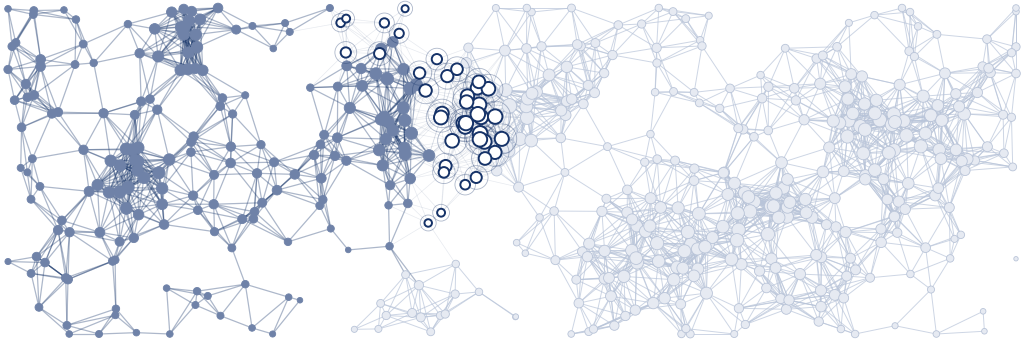
My work
Research themes
Behaviour-driven epidemics
Diseases spread on populations that react to them. People test, protect themselves, or change whom they meet as their perception of risk shifts, and the disease responds in turn. I study this feedback with models in which behaviour and infection dynamics co-evolve — from the interplay between risk perception and the spread of COVID-19 to the testing paradox of bacterial STIs among MSM on HIV PrEP. A central question is which interventions remain effective once the population adapts to them.
Controllability of outbreaks
How much control over an outbreak is possible, and at what cost? Using minimal models as instruments, I have worked on the limits of test-trace-and-isolate, the stable low-case-number regime and the tipping point beyond which spread self-accelerates, relaxing restrictions at the pace of vaccination, and the complex — even chaotic — dynamics that emerge in the endemic state when moderate mitigation interacts with seasonality.
Adaptive networks, and modelling beyond epidemics
Contacts are not static: they are temporal, structured and adaptive. I work on spreading processes on such networks — risk-mediated regulation of contacts in metapopulations, household structure as a driver of incidence, sampling strategies for genomic surveillance — and keep several active collaborations in other fields where a bit of extra modelling helps, from glucose–insulin dynamics and protein engineering to cancer genomics. If you feel like your research could use some extra modelling, let's get in touch.
Selected publications
Three papers to start with
eClinicalMedicine · 2026
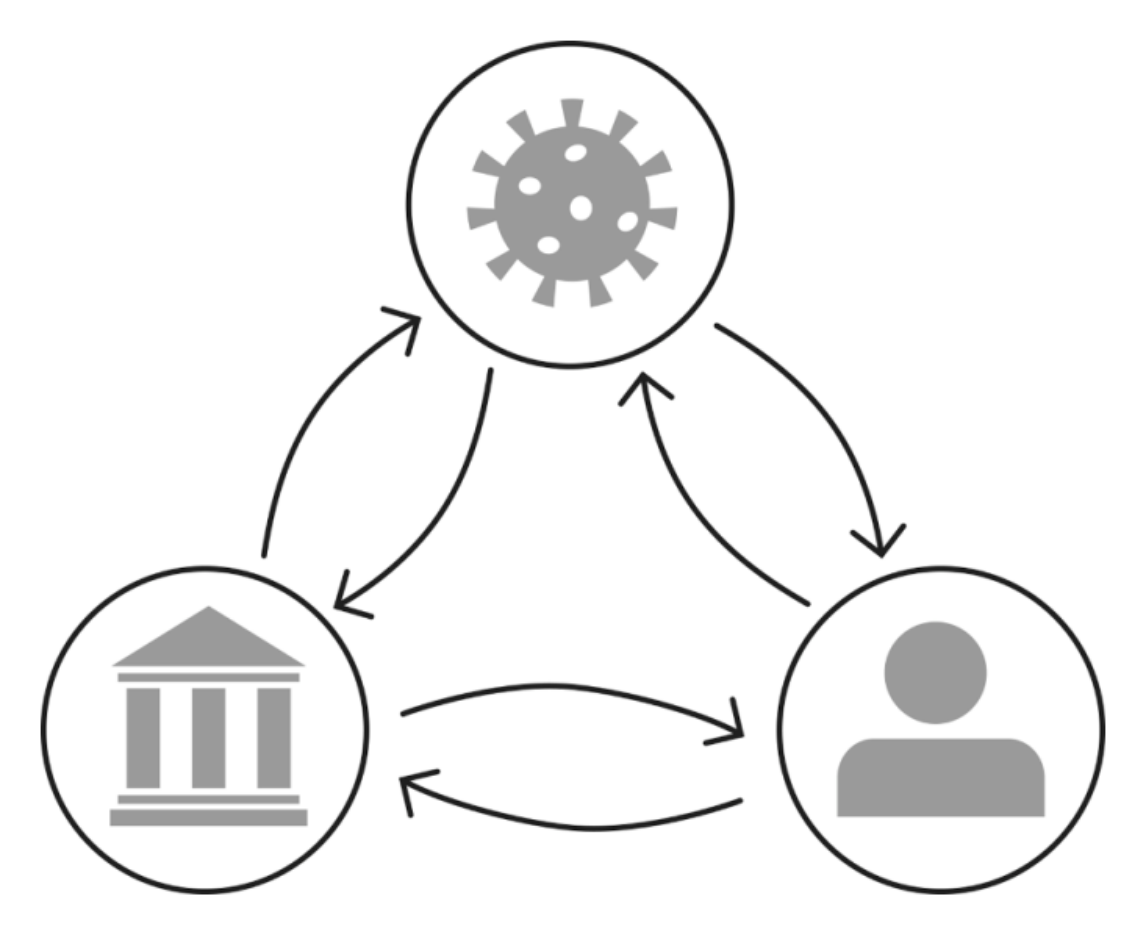
Mechanics of pandemics
Pathogen, people and policy shape each other. What the COVID-19 pandemic taught us about the mechanics shared by pandemics — and what that means for the next one.
Read the paper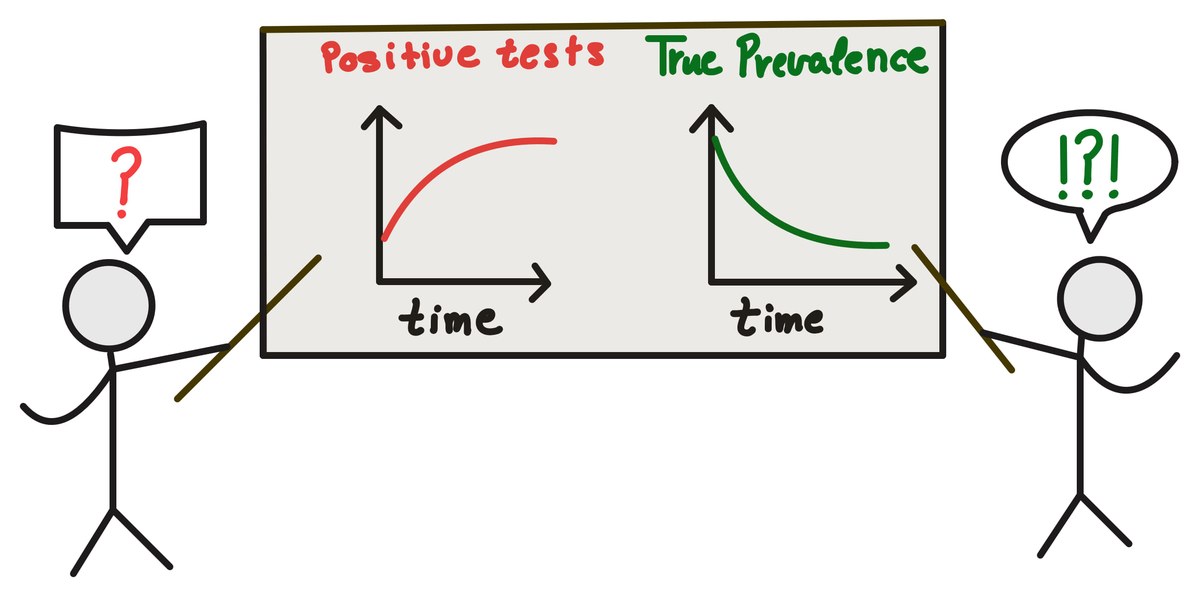
PNAS · 2025
Testing paradox may explain increased observed prevalence of bacterial STIs among MSM on HIV PrEP: A modeling study
True STI prevalence among MSM on PrEP can fall while positive tests rise: more screening finds more, even as transmission drops. A modelling study that reconciles conflicting evidence.
Read the paper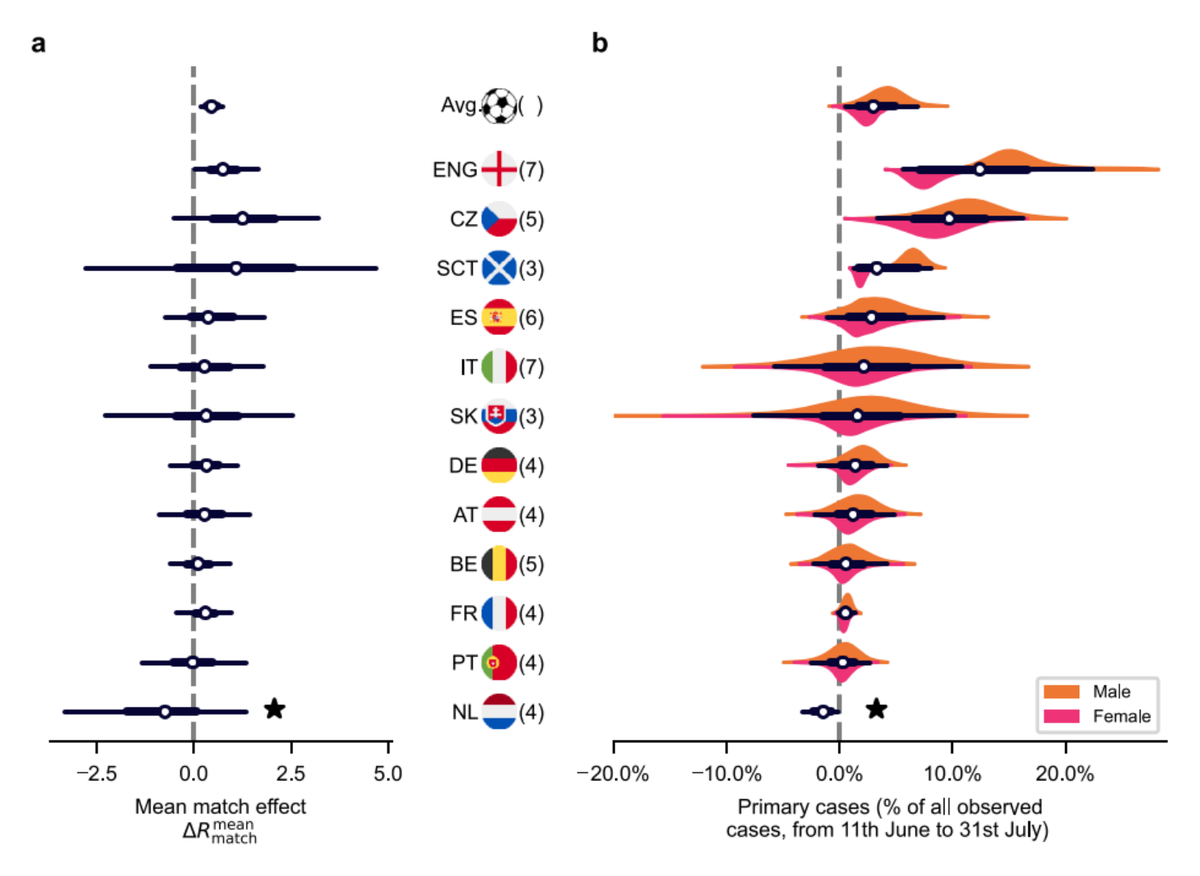
Nature Communications · 2023
Impact of the Euro 2020 championship on the spread of COVID-19
The championship's match schedule works like a randomised study: Bayesian modelling and the gender imbalance in cases attribute about 840,000 COVID-19 cases across 12 countries to Euro 2020.
Read the paper